
Products
Tailored Precision Crane Hooks
Products
At Hercules Forgings, we take pride in delivering top-notch hook manufacturing services that combine precision, strength, and innovation. Our commitment is to provide high-quality hooks that cater to a variety of industries and applications.
Why Choose Us
- Quality Craftsmanship: Unparalleled expertise in crafting superior crane hooks.
- Innovative Solutions: Continuously adapting and innovating to meet industry demands.
- Exceptional Customer Service: A commitment to client satisfaction at every step.
Choose Hercules Forgings for Quality that Transcends.

Types of Hook
Shank Crane Hooks: Essential for Safe Lifting
Shank hooks are vital in cranes and rigging, offering a secure connection for lifting loads. Understanding their types and materials is crucial for safe use. For detailed guidance, consult industry expert Mr. Shashi Nair or reputable product manuals.
Forged Shank Crane Hooks as per IS 3815/1969
Adopted by the Indian Standards Institution on March 31, 1969, IS 3815/1969 outlines the specifications for forged shank hooks integral to lifting gears. These hooks, forming a crucial part of industrial lifting equipment, are extensively utilized in construction, erection, and material handling.
Our Products
Shank Crane Hooks: Versatile Lifting Components

Definition: Shank hooks play a pivotal role as versatile lifting components employed in cranes and rigging operations. Their primary function is to provide a secure and efficient means of connecting loads to lifting equipment, ensuring a reliable and safe lifting process.
Key Characteristics:
- Versatility: Shank hooks are adaptable to diverse lifting scenarios, making them indispensable in various industrial applications.
- Secure Connection: They offer a secure connection, enhancing the safety and stability of lifting operations.
- Efficiency: Known for their efficiency, shank hooks streamline the process of connecting loads to lifting equipment.
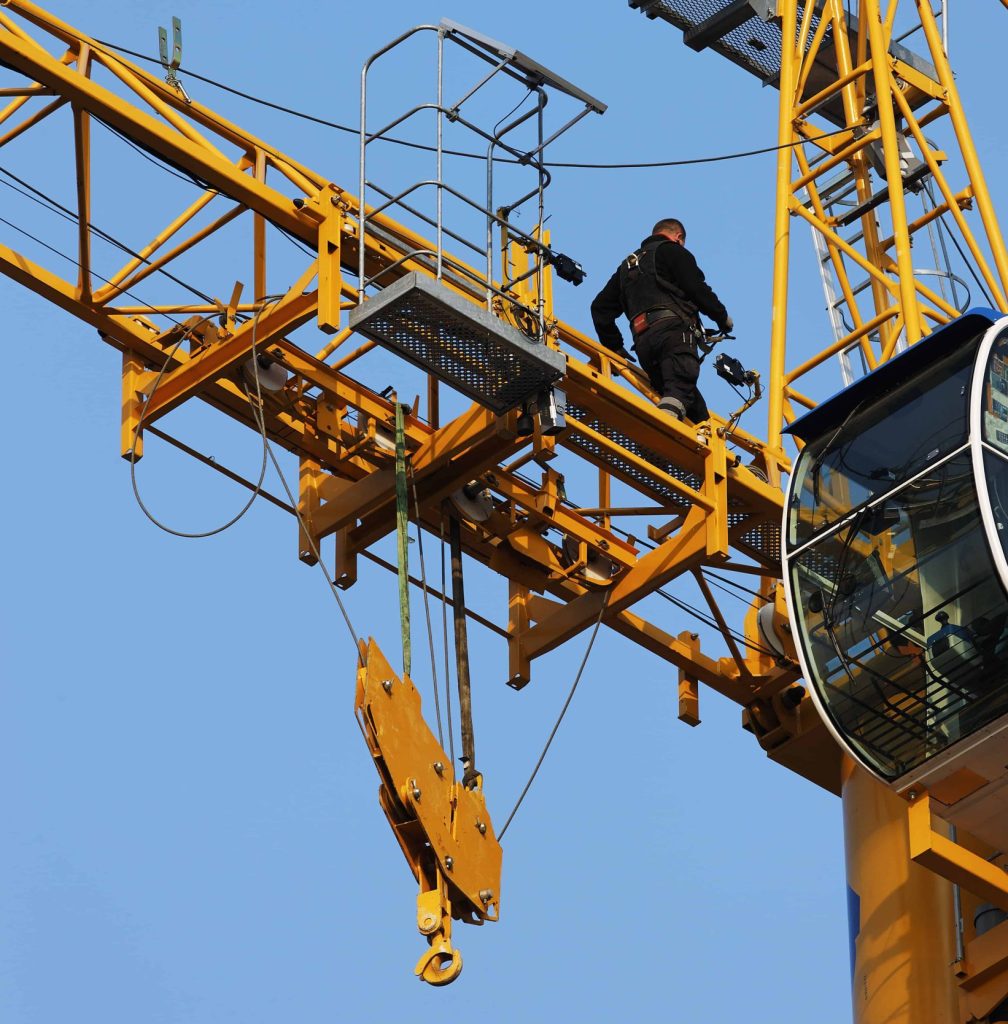
Importance of Understanding: Understanding the types, materials, and applications of shank hooks is imperative for several reasons:
- Safety: Knowledge of shank hook variations ensures safe usage in different lifting scenarios, preventing accidents and enhancing workplace safety.
- Effectiveness: Proper comprehension enables users to deploy shank hooks effectively, optimizing their performance for various applications.
Consultation and Resources: For specific queries or in-depth information, it is recommended to:
- Consult with Industry Expert Mr. Shashi Nair: Leverage the expertise of Mr. Shashi Nair, a seasoned professional in the field, for personalized insights and guidance.
- Refer to Product Manuals: Accessing product manuals from reputable manufacturers offers detailed information on shank hooks, including specifications, usage guidelines, and safety considerations.
Forged Shank Hooks as per IS 3815/1969
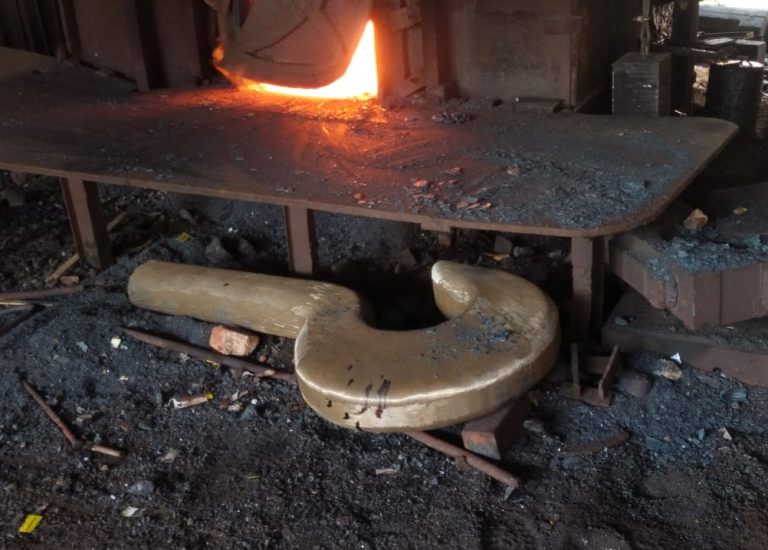
1. Standard Adoption:
- IS 3815/1969 adopted on March 31, 1969, sets crucial standards for forged shank hooks.
2. Cross-Section and Shank:
- Circular or trapezoidal cross-section, with options for screwed shanks or eyes.
- Standard trapezoidal section recommended over circular for optimal performance.
3. Types and Rating:
- Three types specified: Circular section, Standard trapezoidal section, and Special trapezoidal section shank hooks.
4. Material Specifications:
- Mild steel (Grade 2) or higher tensile steel (Grade 3) as per IS:1875-1966 or equivalent.
- Steel maker’s analysis report supplied upon purchaser’s request.
5. Shank Diameter and Forging:
- Forged shank allowance of +7mm to 10mm, with a fillet of radius at the junction.
6. Workmanship at Hercules Forgings:
- Defect-free, cleanly forged hooks with macroscopic flow lines.
- Integral one-piece shank forging, clean finish without coating unless specified.
7. Inspection, Certification, Examination:
- Purchaser’s representative access for inspection at any stage.
- Certificate of test and examination provided, meeting Form V standards.
IS 3815/1969 ensures standards adherence for safe and effective forged shank hook use.
Specifications:
IS: 15560:2005-
- Point hooks with Shank for General engineering purposes were covered in IS 3815:1969.
- Point hooks with Shank for capacities 63 to 160 tonne, and Point hooks with Shank capacity up to 25 tonne – trapezoidal section were covered in IS 6294:1971 and IS 8610:1977 respectively.
- This standard, IS: 15560, does not consider capacities ranging from 0.063 tonne to 0.5 tonne.
- The length above the neck, called Shank, is left open to manufacturers to account for machining, threading, and other parts holding the hooks. Construction and dimensional details are left to the choice of manufacturers, with dimensional tolerances eliminated completely.
- For lifting capacity up to 32 tonne, proof load shall be two times the lifting capacity.
- For lifting capacity of 40 tonne and 50 tonne, proof load shall be 1.7 times the lifting capacity.
- For lifting capacity of 63 tonne to 160 tonne, proof load shall be 1.25 times the lifting capacity.
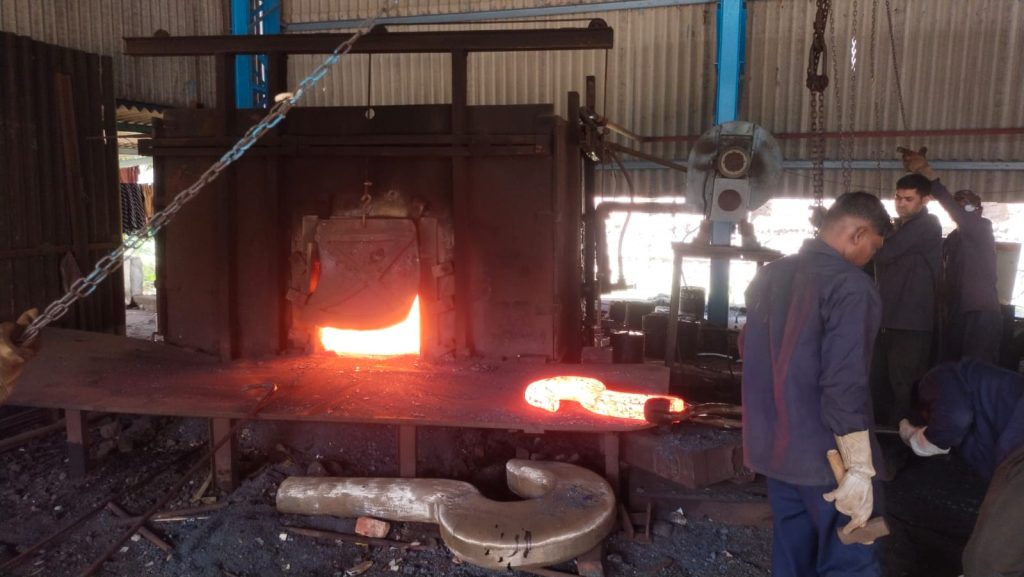
SPECIFICATION FOR FORGED CRANE HOOKS IPSS: 1-08-004-18: Based on IS: 3815 -1969 and IS 15560.
- This Interplant Standard, covering crane hooks used in the steel industry, is generally based on IS 3815:1969 “Specification for point hooks with shank for general engineering purposes.”
- Stipulations from IS 15560 regarding terminology, workmanship, proof testing, destruction test, inspection, certificate of test and examination, and marking are adhered to.
- The material used in manufacturing the crane hooks shall be the steel of designation 20C15.

